The world’s biggest car company is reaping the rewards for a multi-pronged approach to reducing CO2. Here’s why that’s good news for investors.
Toyota has been a long-term holding for us, and it’s been a relatively easy decision to own it. After all, Toyota is:
- the world’s largest car maker 1
- the world’s 6th most valuable brand 2
- the company that in many ways redefined modern manufacturing through just-in-time delivery and its kaizen and kanban production practices.
In late 2023 we began to positively reassess our Toyota position as we discerned some key trends in the battery electric vehicle (BEV) market.
EVs and a range of anxieties
Over the past few years, growth in Electric Vehicle (EV) sales has been staggering. Global sales doubled in 2021. They grew by 60% in 2022 and were up around 30% in 2023.3 But in late 2023 the pace of growth in EV demand began to slow (especially in Europe and the US, much less so in China). More cost-conscious mainstream buyers baulked at high sticker prices, soaring insurance and repair costs, problematic resale values and range anxiety due to inadequate charging infrastructure.
Meanwhile, regulatory backing for EVs became less of a one-way street. In some countries, subsidies have been reduced. In the US, unions and car dealers are pressuring the Biden government to wind back policies that push rapid BEV adoption.
Toyota says “not yet”
The slowdown in EV growth had some interesting implications for Toyota.
While US giants like Ford and GM and European car makers like Volkswagen had made early commitments to a BEV future, Toyota maintained that hybrid vehicles (a technology they invented with the Prius in the late 1990s) offered the most practical pathway to lower emissions.
Chairman and former CEO, Akio Toyoda said one billion people around the world live in areas without electricity. In the case of Toyota, they also supply vehicles to these regions, so a single battery-electric vehicle option cannot provide transportation for everyone and that’s why they are trying to have a variety of options.
Strategically that’s turned into an astute decision. Demand for hybrids is soaring.
- In the first nine months of FY2024, Toyota and Lexus retail sales rose 9.7% Year-on-Year (YoY).
- Sales of their electrified vehicles - mostly hybrids – accelerated 41% YoY) over that period. They now account for 36% of total sales.
- In Europe, over 60% of Toyota and Lexus sales in FY2023 were hybrids.
Toyota’s shift to hybrids is good for profitability as well as volume. Partly that’s a function of increasing demand. But its famed engineering excellence also means Toyota can now make the more complex hybrid drivetrains much more efficiently. They now make as much profit on hybrids as on Internal Combustion Engine cars.
The investment case
Toyota could be entering a period of ‘breakout profitability’. In the short-term, the BEV market is crowded and slowing so there’s lots of pressure on BEV companies outside China to cut costs – a trend that’s already hitting Tesla. Positioned as it is, Toyota avoids getting caught up in a margin-cutting BEV price war while at the same time capturing all the benefits of a growing hybrid market through higher volumes, more pricing power and stronger earnings.
While hybrids have been viewed as a ‘transition’ technology, the Toyota view is that many consumers now prefer hybrids – and may continue to do so. As we write, Toyota is trading on a P/E ratio of 10x, only slightly above its long-term averages. Yet it looks poised for sustained growth.
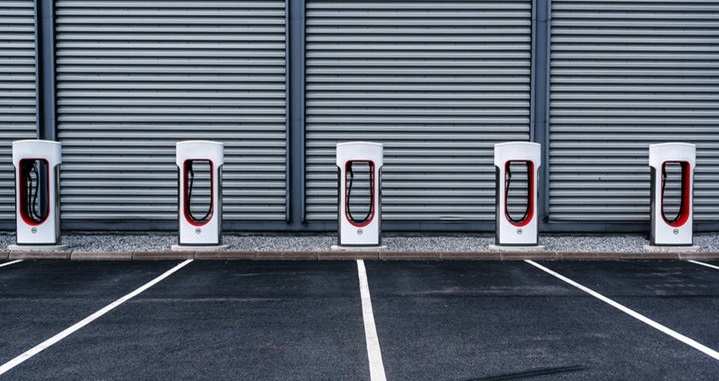
New technologies - and more chargers - could end 'range anxiety' and take EVs mainstream.
Image Source: Adobe
The future is still bright for electric
It’s crucial to note that Toyota is not writing off the BEV market. Even with the recent blip in Europe and America, the case for electric vehicles remains strong. The driver experience is different – and many say better. New European emissions standards due in 2025 may add impetus to European demand.
Perhaps most importantly, car makers are increasingly focused on making more affordable EVs that can appeal to the mainstream driver. BYD in China, for example, is a leader in this effort but other makers are also adapting their approach to both the underlying technologies and the cost profiles of their BEVs.
Toyota is also focused on developing a range of technologies that will make it even more competitive in a world focused on low-carbon transportation.
They aim to produce around 3.5 million BEVs by 2030 but these will be powered by newly-developed bipolar and solid-state battery technology that promise longer range and faster charging. To deliver those new technologies, it is spending the equivalent of US$60bn on electrification through 2030. Toyota is also unwinding its cross shareholdings of other companies and plans to invest the proceeds in electrification.4
For us, the investment case for Toyota now has further improved:
- It passed the BEV-trend test by sticking to its strengths (hybrids) in a way that met customer needs whilst boosting the bottom line.
- It’s investing heavily in R&D to make it competitive in a low-carbon world.
- In its recent third quarter results the company committed to better shareholder returns through higher dividends and buybacks.
- Its valuation remains reasonable.
Toyota also has an outstanding competitive position. It’s a quality business with strong brand equity. Their cars are highly rated for reliability and have outstanding resale value. That represents good value for the people driving the world’s Camrys and RAV4s. High demand for hybrids also means limited inventories and Toyota pays out lower incentives than the industry average. So it’s good for investors too.
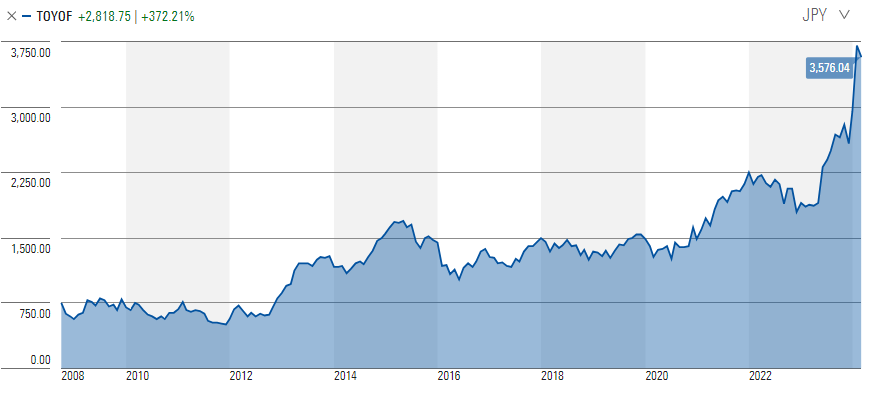
Source: Morningstar.com. End of Date as of Mar 8, 2024.
As at February 2024, Toyota is a holding in the Platinum International Fund and the Platinum Japan Fund.
[1] It sold over 9.5 million vehicles in 2023
[2] Source: Interbrand Best Global Brands, 2023
[3] Source: Benchmark Minerals
[4] For more on a new shareholder-friendly culture in Japan see our recent article: Japan’s reform. New dawn or same old story.
Leon Rapp is Co-Portfolio Manager, Japan Strategies at Platinum. This information is commentary only (i.e. our general thoughts). It is not intended to be, nor should it be construed as, investment advice. To the extent permitted by law, no liability is accepted for any loss or damage as a result of any reliance on this information. Before making any investment decision you need to consider (with your financial adviser) your particular investment needs, objectives and circumstances.
For more articles and papers by Platinum click here.